BNP emerges front-runner as India warms up, fears of Jamaat-ISI meddling rise ahead of Bangladesh polls

New Delhi, Dec 2 (IANS) Ties between India and Bangladesh have strained considerably following the ouster of Sheikh Hasina. A hostile Jamaat-e-Islami-controlled Muhammad Yunus regime in Bangladesh has made matters worse for India. India, however, understands the importance of maintaining good ties with Bangladesh and has been in touch with the Bangladesh Nationalist Party (BNP).
New Delhi remained in touch with the BNP leadership, although ties in the past with Dhaka, when this party was in power, were not very good. The BNP has been reciprocal about India’s outreach and has realised the importance of strong ties for the benefit of both nations as well as the region.
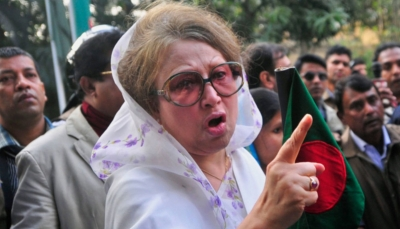
One of the key decisions that the BNP took was to contest the polls alone and not alongside the Jamaat-e-Islami, as it had done in the past. This decision also works in India’s favour since the Jamaat is an ISI stooge and works for the interests of Pakistan. Along with Pakistan, it has been planning a return to the pre-1971 situation. Prime Minister Narendra Modi’s message expressing concern over BNP chief Khaleda Zia’s health and the response by the party are proof that ties are improving.
After PM expressed concern and wished Khaleda Zia a speedy recovery, the BNP wrote, “BNP expresses its sincere gratitude to the Honourable Prime Minister of India, @narendramodi, for his thoughtful message and kind wishes for the speedy recovery of BNP Chairperson Begum Khaleda Zia. BNP deeply appreciates this gesture of goodwill and the expression of readiness to extend support.”
Indian officials say that the strengthening of ties between India and the BNP, which is most likely to win the February elections, has not gone down too well with either the Jamaat or Pakistan. With the Awami League out of the picture due to a ban on contesting the elections, all the scales are tipped in favour of the BNP.
An Intelligence Bureau official said that with the BNP ahead, all attempts are being made to tweak the election results so that the Jamaat remains at the helm. The Jamaat and ISI would not want BNP to be at the helm for multiple reasons. The Jamaat would become weaker and lose control over the country. Its radical push would be stalled in a big way. The ISI would not want the BNP as the party would not let it operate the way it wants in Bangladesh.
Further, the ties between the BNP and India are an irritant for Pakistan. Khaleda Zia is in a critical condition, and her health will earn the BNP a lot of sympathy. This would be a factor during the elections, and the experts feel that this issue could only add to the number of votes that the BNP would win.
Officials say that the Bangladesh establishment has been making it hard for Zia’s son and acting chairperson of the BNP, Tarique Rahman, to visit the country. While he is likely to visit the country soon to be with his ailing mother, the process has not been too smooth. At such a critical time, the Yunus government has only made perfunctory gestures to facilitate his visit. He is currently in London.
Bangladesh’s Foreign Affairs Adviser Mohammed Touhid Hossain said, “There is no restriction if Tarique Rahman wants to come back. A travel pass can be issued in one day. And if Khaleda Zia needs to travel abroad due to ill health, any assistance required from the interim government will be provided. In this critical time.”
“I, like any child, have an intense desire to receive my mother’s affectionate touch. However, like everyone else, the ability to realise this is neither unreservedly under my sole decision-making authority nor my exclusive control. The scope for elaborating on this sensitive matter is also limited. Our family is hopeful that my prolonged, anxious wait for repatriation will end as soon as this political reality reaches the desired level,” Rahman said in a post on Facebook.
The BNP leaders say that Tarique, who has been in London since 2008, is unwilling to use the one-time travel pass and instead wants to travel on a new Bangladeshi passport. The procedural delay by the administration, where Rahman is concerned, is due to insecurity, an official said. He has emerged as the future Prime Minister of Bangladesh, and this is not what the Jamaat or ISI want.
Although he was accused of being close to the ISI in the past, a lot has changed since. In addition to the sympathy that the BNP is getting owing to Zia’s health, Rahman’s visit to Bangladesh will galvanise the party cadre.
Officials say, for the Yunus administration, Jamaat and Pakistan, a lot would change post the elections. As the three parties wish to maintain control over the country, there would be a lot of meddling to tweak the results in their favour. The ban on the Awami League was a move due to this insecurity.
Following the ban and in the absence of their leader, Sheikh Hasina, the party has weakened significantly. However, the Awami League voters would either refrain from taking part in the elections or move to the BNP, experts say. They say that to stall the BNP, the ISI and Jamaat are likely to indulge in a lot of meddling to tilt the scales in their favour. However, these actions also pose a major security risk in Bangladesh as there is every chance that attempts to tweak the elections would result in large-scale violence in the country.
–IANS
vicky/skp