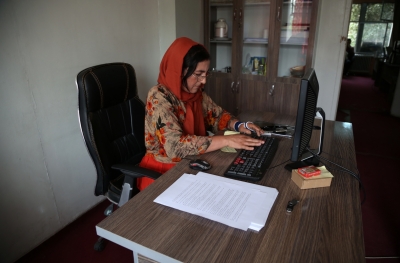
Kabul, Dec 1 (IANS) Highlighting the arrest of Afghan journalist Hamoon Khamosh and his family in Islamabad, the Afghanistan Media Support Organisation (AMSO) has slammed the Pakistani authorities for escalating harassment, arrests and expulsion of Afghan journalists from the neighbouring country.
AMSO said Khamosh faces possible deportation to Afghanistan, where journalists have been facing restrictions, intimidation and arbitrary detention. The organisation emphasised that many Afghan refugees who travelled to Pakistan for safety are now fearing for their lives, Afghanistan’s leading news agency Khaama Press reported on Monday.
According to AMSO, the Pakistani authorities have arrested and forcibly deported six Afghan journalists in the past month. Many of them had earlier fled after intense censorship, political pressure and direct security threats in Afghanistan before seeking asylum in Pakistan.
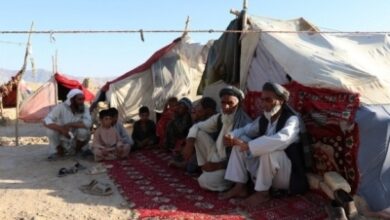
AMSO detailed that Afghan journalists, who left Afghanistan due to professional risks, now live in conditions where “their lives and human dignity face serious danger.” Many of them felt Pakistan would be a temporary sanctuary for them. However, it has turned out to be a place of uncertainty and fear.
Press freedom advocates have requested Pakistan to stop deportations and immediately restore visa services for Afghan journalists as forced deportation could expose them to grave danger. Pakistan has escalated arrests and expulsions of Afghan nationals amid ongoing tensions with Afghanistan.
Last month, several Afghan refugees in Pakistan went on record, saying that they have been overwhelmed by continuous pressure from the country’s police which, apart from conducting searches, is arresting people and exploiting their vulnerable situation as a source of income.
A report in Afghanistan-based newspaper 8AM Media, also known as Hasht-e-Subh Daily, highlighted that Afghan refugees in Pakistan do not have basic human rights and live in constant fear and anxiety. Human rights groups and refugee-support groups have remained silent regarding the uncertainty and the government’s failure to fulfil its commitment about human rights and the protection of refugees.
Over the past few months, as tensions between the Taliban and Pakistan continue, Islamabad has increased its pressure on Afghan refugees with the Pakistani forces conducting widespread harassment of migrants each day in various areas, including Islamabad. Apart from official operations involving the arrest of Afghan refugees without visas, people in plain clothes extort money from migrants in residential areas. Afghan people have said that they live in inhumane conditions filled with fear and anxiety and their refugee rights are not respected.
“The situation is extremely distressing. I wish the official operations team would simply arrest and take people away. This method is not right; the police know no one will report them, so they come individually for searches. Several men in plain clothes lie in wait in the neighbourhood, grab someone, and take them away. It is unclear whether they are police, thieves, or cooperating with the police. Now, even if an ordinary person commits theft or kidnapping under the name of the police, people assume he is a police officer,” quoted an Afghan national as saying.
“These individuals detain migrants in their personal vehicles; some are released on the spot after paying money, while others are taken to police posts. They are probably police themselves or collaborating with the police. The level of theft and robbery is extremely high, and no institution hears the people’s voices. The situation is deeply painful; a country that has no defender and whose citizens have no protection or credibility anywhere in the world,” the refugee added.
Junaid, another refugee, recalled how he was stopped by a man in plain clothes a few nights back when he was going to buy something.
Recalling the incident, Junaid said, “He introduced himself as a police officer and asked for my visa. I asked: Who are you? He said he was police. I asked him to show his card. He treated me violently and said that if I talked too much, I would be arrested. I tried to resist, but then two other men arrived and told me to get into the car. I had to pay 15,000 rupees for my release. Now we do not know who is police are. It is clear they have realized that migrants have no one behind them and are using this situation to fill their pockets.”
–IANS
akl/as