Maharashtra: Winter Session likely to be a stormy affair as Mahayuti, MVA ready with ammunition

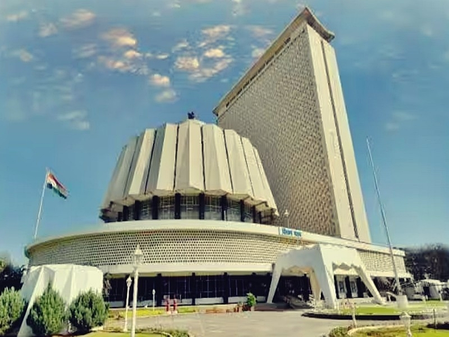
Mumbai, Dec 6 (IANS) The Mahayuti and Maha Vikas Aghadi (MVA) are geared for a week long winter session of the Maharashtra Legislature in the orange city Nagpur being held from December 8 to 14 is likely to be a “stormy affair”. Mahayuti comprising BJP, Shiv Sena and NCP is determined to project its achievements and future roadmap for Viksit Maharashtra 2047, especially against the backdrop of completion of a year in office on December 5.
The ruling alliance is ready to project new benchmarks set in for development in every sector over the past year for accelerating the pace of progress and improving the living standards of the common citizen through digital services and transparency.
On the other hand, MVA consisting of Shiv Sena UBT, Congress and NCP SP is prepared to aggressively challenge the Mahayuti government mainly on farmer crisis, corruption/electoral Mismanagement, social polarisation (Maratha and OBC quota protests and delicate state finances.
Their strategy is to use the government’s perceived failures and the shortened duration of the session to maximize political theater and public pressure. MVA is also determined to press for the appointment of leaders of Opposition in the state assembly and council especially when the Mahayuti government and the presiding officers of both the houses have said the matter is under consideration.
The Opposition plans to relentlessly target the government over the severe agrarian crisis caused by unseasonal rains and floods.
They will demand the declaration of a “wet drought” and insist on a comprehensive farm loan waiver, calling the government’s existing relief package (around Rs 32,000 crore) insufficient. They are expected to take on the government over the delay in formally submitting the detailed damage assessment memorandum (submitted in late November 2025) to the Centre. They plan to frame this delay as evidence of the government’s neglect of farmers’ interests.
Further, the Opposition will flag off the recent chaos in the local body elections questioning the integrity of the administration.The Opposition has already alleged that the postponement of municipal elections in 12 districts was a “planned mess” and accused the government, particularly the BJP, of using the postponement to gain an advantage and help them secure enough time for further “setting”.
Shiv Sena UBT in particular has accused the government of reducing the State Election Commission to a “joker” in the electoral game.
The Opposition is likely to grill the government over “most expensive and corrupt local body elections” citing open use of “Lakshmi Darshan” (distribution of cash to voters) and the seizure of large sums of money from ruling party functionaries. Moreover, the Opposition is prepared to raise concerns over potential “EVM scams”.
They will question the safety of the Electronic Voting Machines being stored for 19 days after voting before the postponed counting on December 21, raising suspicion of tampering.
The Opposition has accused the government of “weakening the social fabric” by creating confusion and conflict between the Maratha and OBC communities through its handling of the Kunbi certificate Government Resolution (GR).
They are expected to demand a clearer, permanent, and constitutionally sound solution, potentially pushing for a caste-based census, while accusing the government of pitting the two communities against each other for political gain.
However, the short duration is the Mahayuti’s main shield, designed to limit the time the Opposition has for debate, forcing them to prioritise their attacks and ultimately containing the session’s impact.
The government is prioritising the passage of essential bills and supplementary demands (additional funds). This allows them to frame their narrative around “good governance” and “development” while diverting attention from contentious social and political failures.
Ministers are prepared to issue official clarifications and make statements immediately to counter Opposition claims, as seen with the submission of the flood relief memo.
The government will cite the timely announcement and disbursement of the state’s Rs 32,000 crore relief package for flood hit farmers as proof of their commitment.
They will use the November 2025 submission of the flood loss assessment memorandum to the Centre to deflect the claim that they failed to seek Central aid in time.
Besides, the government will refer to the formation of a high level committee to study crop loan waiver and suggest short and long terms measures to make farmers debt free.
Chief Minister Devendra Fadnavis has already announced that the government is not running away but will take a decision on crop loan waiver by June 2026.
The government will defend the Kunbi-certificate GR (which allows Marathas with proof to get OBC benefits) while simultaneously emphasising the protection of the existing OBC quota. Two separate cabinet sub-committees have been formed to address the concerns of both Marathas and OBCs, aiming to appear fair to both sides.
The government is prepared to counter all allegations relating to corruption as “politically motivated” and lacking evidence, stressing that the government will answer based on facts, not political rhetoric. They may try to raise past corruption cases involving the MVA leaders to shift the focus and neutralise the moral high ground.
In the case of chaos in local body elections, the government is likely to cite the High Court order and the extended election code of conduct as the reasons for the session’s curtailment and the polling postponements. CM Fadnavis has already publicly expressed “dissatisfaction” with the State Election Commission’s handling, creating distance between the government and the election chaos.
Against this backdrop, the winter session is expected to be less about legislative output and more about political theatre and brinkmanship.
The Opposition’s strength lies in its unified approach to current public discontent over farmer issues, social tensions, and corruption.
The government’s strategy will rely on its legislative majority to push through business and use the session’s short duration as a shield, ensuring that very few meaningful, long-term policy decisions will emerge from the seven-day sitting.
(Sanjay Jog can be contacted at sanjay.j@ians.in)
–IANS
sj/pgh